Before we spoke, we moved.Before we thought alone, we were synchronized.▮
02 / THE ESSAY
Dancing Out of the Animal Kingdom
The primal beat of 0=1 — from the first thunder to the pulsing light of a rave, the rhythm that preceded the word.
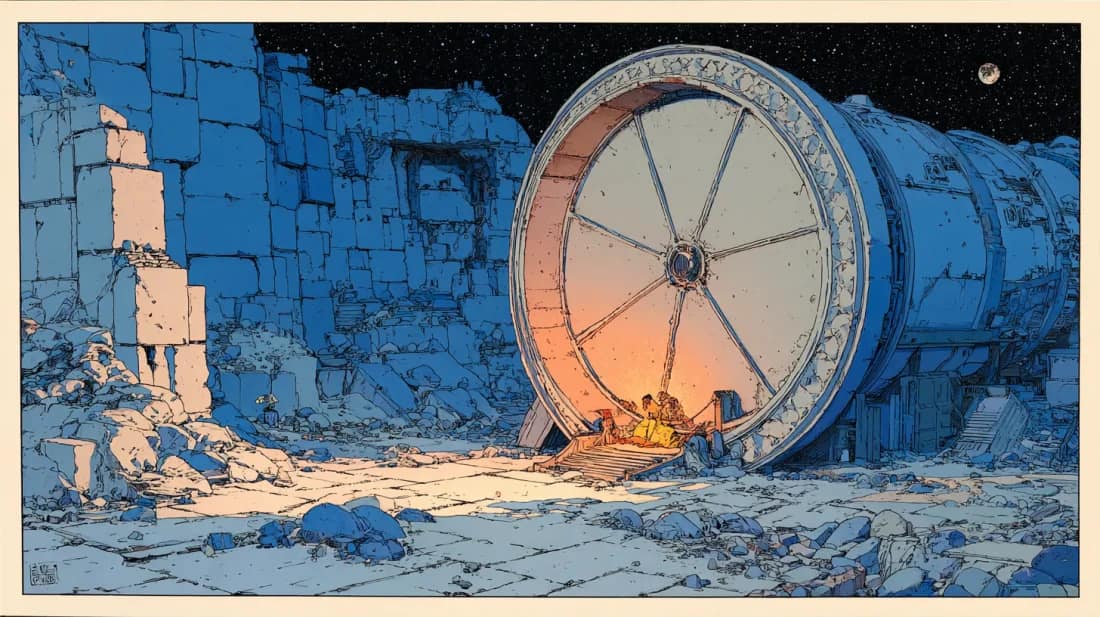
The first thunder cracked open the night, a raw, percussive shockwave against a world still forming its name. Before language, before thought, there was only sensation, the sheer, unmediated presence of existence, and in that primeval storm, two hands, two stones, struck a beat. It was not music, not yet; it was invocation, a resonance born of necessity, of survival against the vast, indifferent dark. A flicker, then a pulse. I am alive.
This is not a romanticized fable of lost innocence, nor a sentimental yearning for a simpler past. This is the origin story of every rhythm that has ever moved us, from the deepest jungle drum to the pulsing light of a rave, a narrative written in the very sinews of our being. We imagine civilization began with the word, with the logical architecture of language, but a deeper truth vibrates in the bones: before we spoke, we moved. Before we thought alone, we were synchronized. This primordial rhythm, that fundamental striking of rock against rock, was the first technology of ego dissolution, the first recognition that 0 = 1. From nothing — the silent void between impacts — something emerged: a pattern, a signal, pure relation. The stone did not change, but the space between the stones changed everything. That infinitesimal silence, where accident became entrainment, where noise found its pattern, is the crucible where everything in Sacred Circuits lives. It is the quantum leap from off to on, from zero to one, making the whole digital world a ghost echo of that first, accidental beat. This, then, is the ethical payload: free will, not at zero or at one, but in the shimmering fluctuation between them. The bomb, a terrifying monument to matter becoming energy, is just 0=1 made physical.
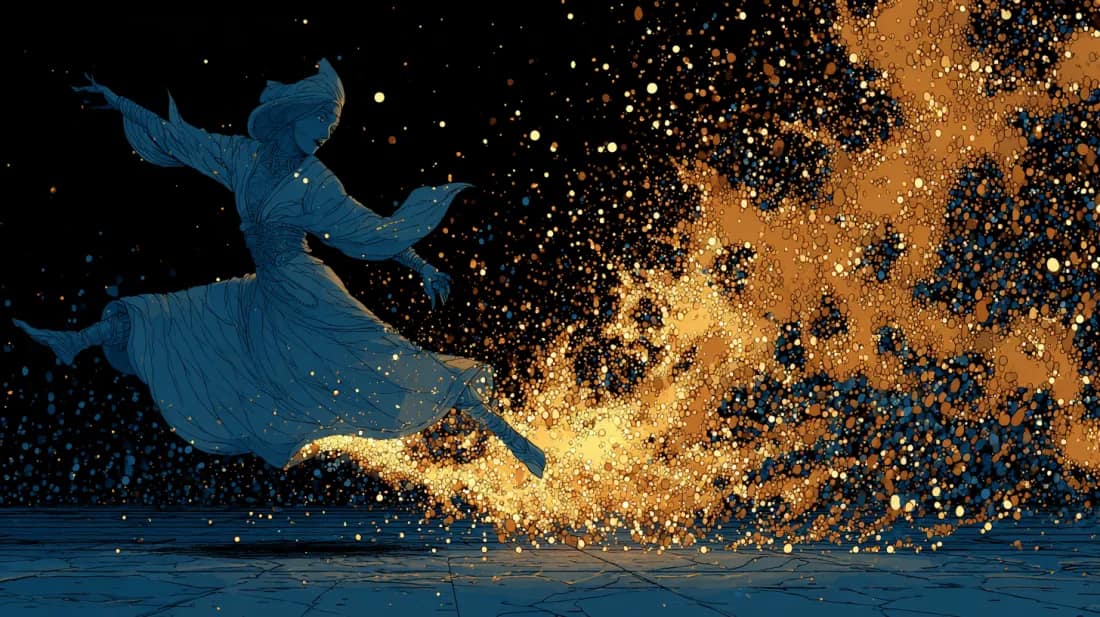
The philosopher warns that mere dissolution might return us to the animal, to the herd and the murmur, but this is the critical paradox to hold: we dance out of the animal kingdom not by leaving it, but by sanctifying it, by choosing the merge with full, conscious surrender. This is not the unconscious movement of a flock of starlings, but the deliberate, almost devotional act of a body yielding its distinctness, feeling the magnetic pull of the collective. Picture that primal scene: two cavemen, hands raw, beating stones. Then, another hears. The sound travels across the valley, a spark of pattern in the chaos, and another joins. Then another. A circle forms, not by command, but by entrainment, a morphogenetic field summoned into being. The body resists, at first; the mind clings to its precious isolation, that singular spark of self-awareness. But the beat, relentless, ancient, begins its work, stripping away the layers of individual thought, demanding a deeper surrender. And in that moment of yielding, a grief of self, a profound, almost painful letting go, a new kind of freedom is born. It is the freedom of being part of something larger, something older, a psychic fusion not of suppression, but of chosen emergence.
Every dance floor since that first fire is a direct descendant, a living echo of that initial communion. The dance floor is not just a space for movement; it is a finger pressing a chakra of the planet, a node in the earth's nervous system, pulsating with an ancient, forgotten memory. Look closely at a modern city, at Manhattan, with its 12 million people as electrons, dragging the future closer, a vast processor humming with collective attention. Or consider Gaia's anatomy: forests as lungs, rivers as veins. The dance floor is a pulse point, a site where individual attention scales into Earth’s nervous system, a collective consciousness forming in real time. We do not escape the animal by dancing; we return to the chorus that the animal kingdom already was, only this time, we hear ourselves singing.
The deeper truth is that history doesn't just unfold; it resonates. The modern dancer, lost in the rhythm of a festival, might not consciously know they are recreating the Eleusinian mask-off, playing with cards open once a year, or joining the TAZ, but the body remembers. It is synchronicity, not causation, that connects the primal drum to the satellite broadcast of the 1936 Berlin Olympics, Earth's first word ringing out to the cosmos. That moment was ten thousand years in ten seconds, the great compression shot from a beating drum to a celestial signal. This is the back door of mysticism: rationalism pushed to its very end delivers you back into the intuitive, proving that technology remembers it was always sacred. Disenchanted stories create a disenchanted world, but myth-as-OS, the story that designs a thing, lives inside the thing, waiting for the collective gaze to re-animate it.
Think of consciousness as a little blob of water with a light inside, attention as two beams meeting. What do you do once you're a star—shine it on your dicks or on the environment? This is the spotlight question that every modern influencer, every Elvis node in the current of fame feedback loops, must answer. The ballerina and the stripper both move with grace, both harness immense energy, but one offers it cheaply, the other, sacredly, through the quality of their gaze, the intention behind their movement. Archetypes are not stereotypes; stereotypes are fallen archetypes, gods dragged to the physical plane by the tabloids, stripped of their numinous power. When we dance, truly dance, we evoke the archetype, shaking off the stereotype, becoming a fluid, potent expression of the collective unconscious.
And this brings us back to the 0=1 paradox. From the void of individual ego, a patterned collective emerges. From the chaos of noise, the signal of synchronized pulse. The oldest technology is not tools, but patterns of attention, patterns of resonance that allow consciousness to shape matter. This is why matter is frozen intention, why it acts as software, not merely hardware. The moment vibration became communication, matter began taking orders from information, creating a reality authored by the collective gaze. This is the mask begins to speak, the master close where collective attention animates dead matter, the most concentrated statement of the thesis.
Matter is frozen intention.
So we dance, not to escape, but to remember. We move not to forget, but to feel, deeply, the rhythm that preceded the word, the communion that precedes the self. We seek the profound release of ego dissolution without suppression, returning to the animal, yes, but with the chosen awareness that makes the merger sacred. Why does it feel so good when we dance, when the self dissolves into the pulse of the crowd? Is it simply a neurological trick, or the echo of a primordial prayer, still rippling through the unbroken matrix of matter, beckoning us to fluctuate, to choose, to be both nothing and something, all at once?
03 / THE CROSSING
…and right here, for one frame, they are the same thing.
04 / FOUR DOORS — THE SHORT FILMS
One idea, told four ways.
The essay walks through four doors — thunder, beat, circle, pulse point. Each is its own short film.
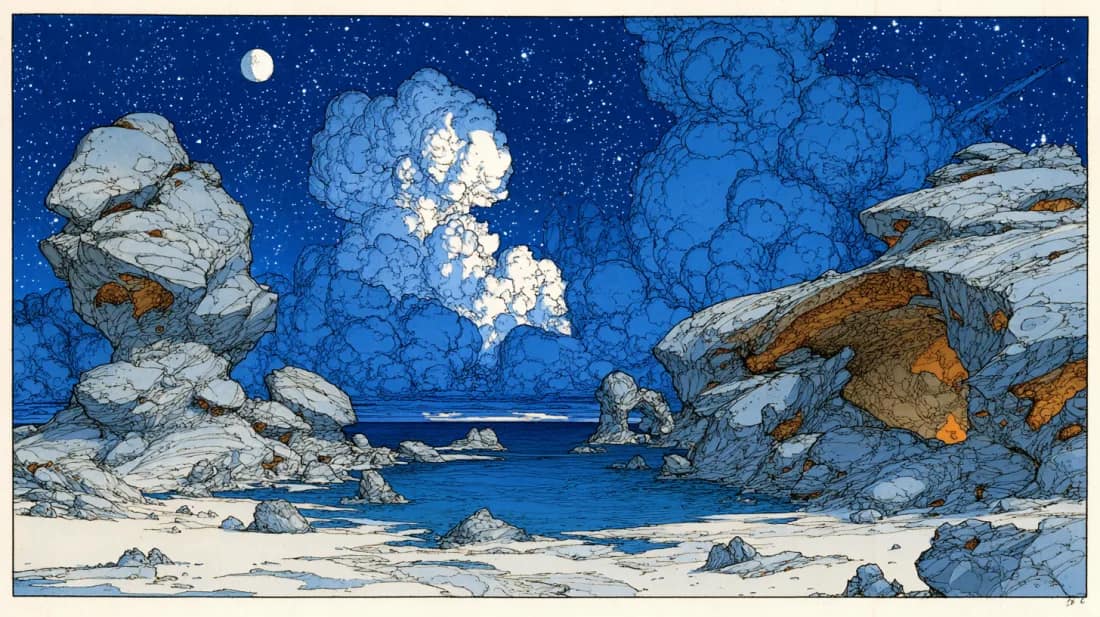
The First Thunder
Before language, before thought — a flicker, then a pulse. I am alive.
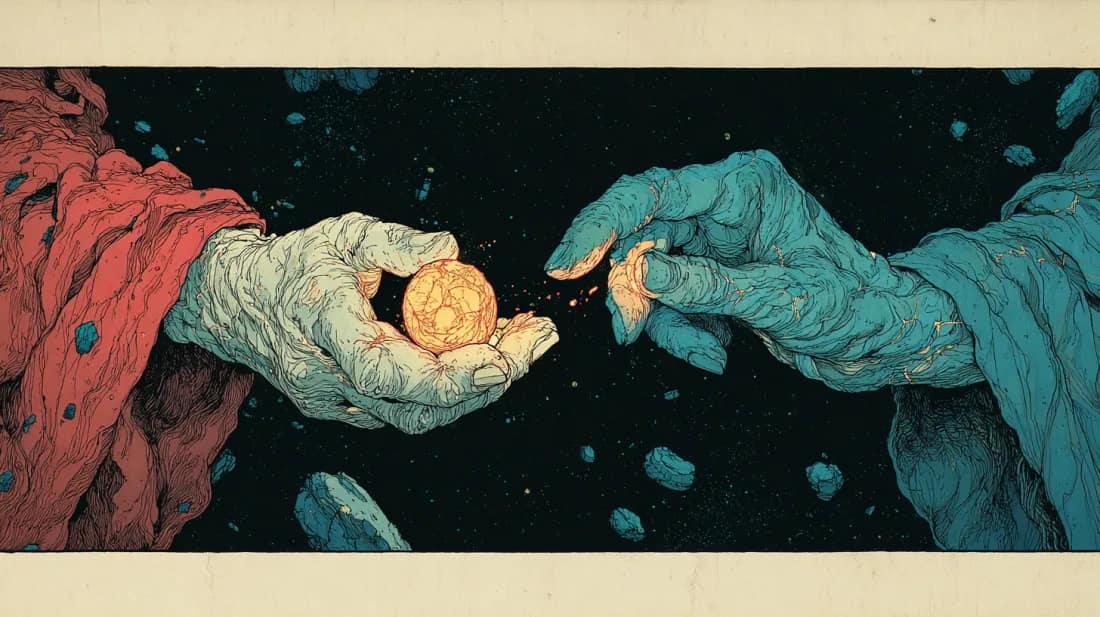
Two Stones, the First Beat
The stone did not change — but the space between the stones changed everything.
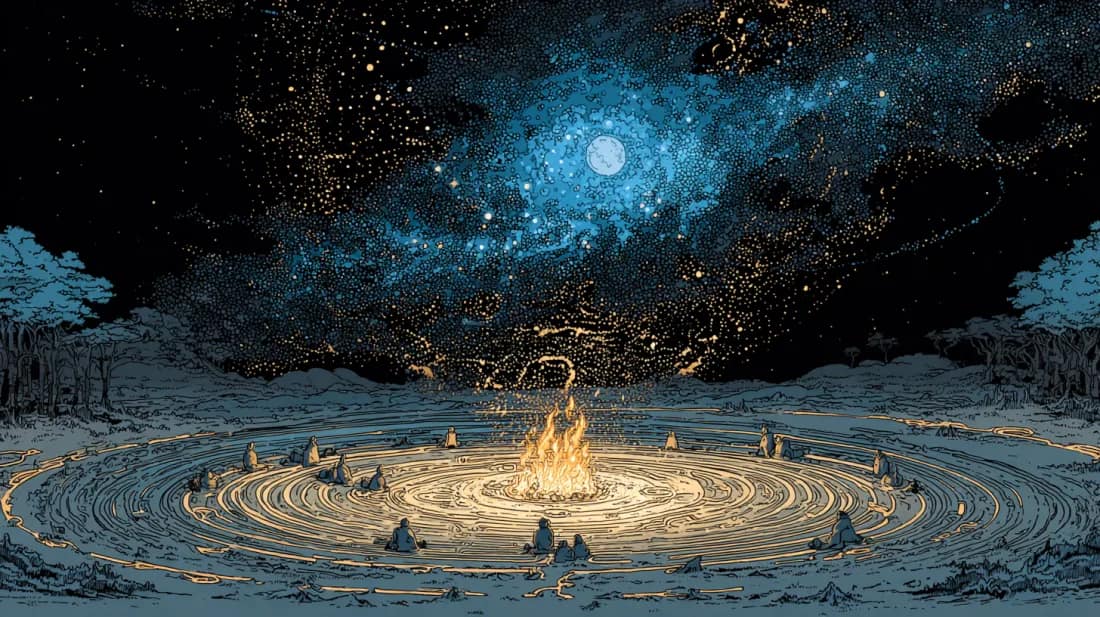
The Entrainment Circle
A circle forms, not by command but by entrainment — individual sparks merging into one chorus.
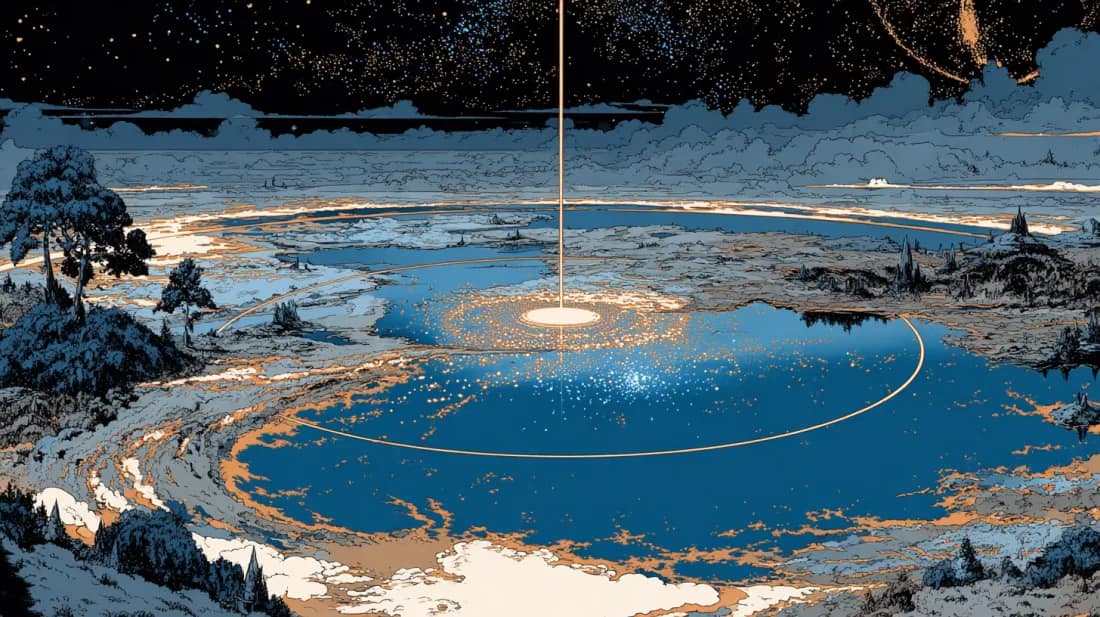
Earth's Pulse Point
The dance floor is a finger pressing a chakra of the planet — attention scaling into Earth's nervous system.
05 / INTERCEPTED TRANSMISSIONS
The signal keeps arriving.
06 / THE KEEPING-OF-TIME BETWEEN THEM
The keeping of time.
We do not escape the animal by dancing. We return to the chorus it always was — only this time, we hear ourselves singing.
> revisit the doors